Europe on Foot

Arjun Mehta
| 02-09-2026
 · Travel team
A European holiday does not have to mean joining a queue outside every famous landmark.
Walking trips are becoming increasingly popular precisely because they slow everything down. Instead of arriving, photographing and leaving, travelers spend hours moving through villages, forests and coastal paths that most day visitors never reach. Interest is clearly growing..
UK searches for “walking holiday” have risen 60% year on year. The best part is that walking can make even heavily visited destinations feel surprisingly personal — especially in spring and autumn.
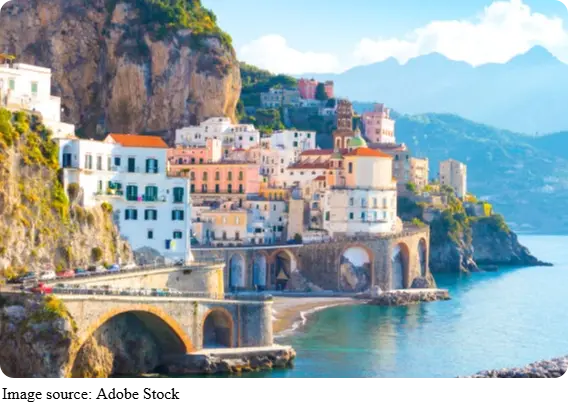
1. Amalfi Coast: Leave the Road
The Amalfi Coast may seem an unlikely destination for escaping crowds, but its character changes almost immediately once you leave the main roads.
The classic route is the Path of the Gоds, a high trail connecting mountain landscapes above the coast with enormous views over the Mediterranean.
Instead of spending the whole day around Amalfi’s Cathedral Square, continue through the narrow backstreets or walk from Amalfi toward neighboring Atrani. Local guide Veriano Verde explains that many residents still live hundreds of steps above the main road, making walking part of ordinary life rather than simply a tourist activity.
Nearby Agerola also gives walkers a glimpse of the agricultural communities behind the famous coastline.
Best time: April–June or September–October. Winter is even quieter if swimming is not important.
A week-long guided walking itinerary currently starts around €1,715 per person, excluding flights.
For an independent trip, allow roughly €100–€160 per person per day for shared accommodation, meals and local transport.
Amalfi Coast
2. Santorini and Naxos: Walk Beyond Oia
Santorini’s famous sunsets attract enormous crowds, but the island looks completely different when approached on foot.
The Caldera Trail from Fira to Oia is the obvious starting point, following the volcanic rim with uninterrupted sea views. The smarter idea, however, is not to stop there. Combine Santorini with Naxos, where the trail toward Mount Zas leads into a more rugged Cycladic landscape. The mountain is the highest point in the Cyclades and is closely connected with Greek mythology. Walking specialist Annie Antonatou argues that this slower style of travel spreads visitors beyond the most congested viewpoints and into smaller villages and locally run businesses.
Best time: late March–early June or September–November.
A week-long self-guided Santorini and Naxos walking trip starts around €642 per person before flights.
Recommendation: choose autumn if you want warm sea temperatures after hiking without the intense midsummer heat.
3. Algarve: Follow the Wild Coast
Forget large resorts for a moment. The southwest Algarve has a much wilder personality. The Fishermen’s Trail runs for 78 km between Porto Covo and Odeceixe and forms part of the much larger Rota Vicentina walking network.
The path follows Atlantic cliffs, quiet beaches and small coastal communities where fishing remains part of daily life. Cape Sardão is particularly memorable: white storks are known to nest on the sea cliffs here.The attraction is not only the scenery. Small cafés, fishing villages and family-run restaurants become part of the route rather than places you rush past in a car.
A self-guided week on the Fishermen’s Trail starts from approximately €490 per person, excluding flights.
Best time: March–June or September–November.
Summer is deliberately avoided by some walking operators because of the heat and heavier visitor pressure.
Recommended budget: €70–€110 per person per day for an independent trip with simple accommodation.
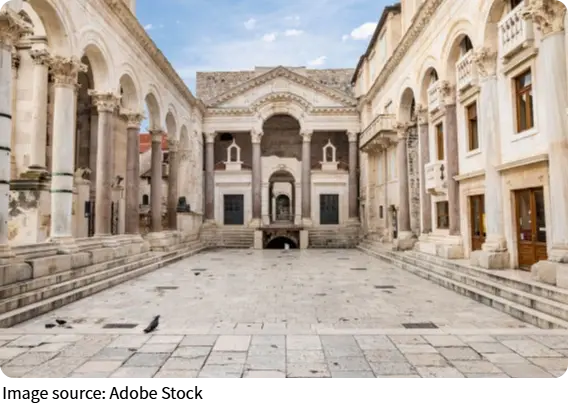
4. Dalmatian Coast: Croatia Beyond Dubrovnik
Dubrovnik is beautiful, but autumn gives you a chance to experience the region without spending the whole trip inside its historic center.
Start with a hike up Mount Srđ for wide views over Dubrovnik and the Adriatic, then move outward toward the Pelješac Peninsula.
Around Ston, walking routes combine medieval architecture with rural landscapes before continuing toward the coast.
Mljet Island offers an entirely different experience. Trails run through pine forest and around the saltwater lakes of Great Lake and Small Lake, with opportunities to stop for swimming. More energetic walkers can continue toward Montokuc Peak for panoramic views.
A seven-day self-guided route combining Dubrovnik, Mljet Island and the Pelješac Peninsula starts at around €985 per person before flights.
Best time: September and October.
If you still want to walk Dubrovnik’s City Walls, go before 9am or after 4pm, when cruise-related congestion is usually lower.
Travel at Walking Speed
Choose Amalfi for dramatic cliffs, Santorini and Naxos for island landscapes, the Algarve for wild Atlantic coast and Dalmatia for a combination of history and nature.
A walking holiday does not necessarily mean covering huge distances. Its real advantage is having enough time to notice the places most visitors pass through far too quickly.