Tongariki's 15 Giants

Bianca
| 31-08-2026
 · Travel team
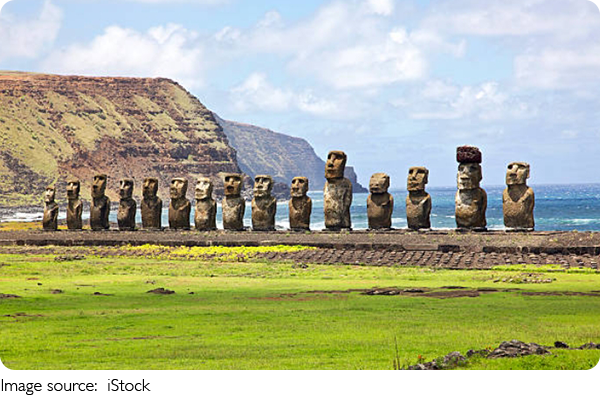
Hi, readers. You've probably seen the photos: fifteen giant stone figures lined up on a long platform, backs to the Pacific, staring inland.
That's Ahu Tongariki, the largest moai platform ever built on Rapa Nui, and it hits different in person. The photos don't prepare you for the sheer scale, or for how quiet it gets when the tour vans leave.
Why this platform stands apart
Tongariki isn't just big, it's a record holder. The platform stretches about 220 meters, and the fifteen moai on top weigh an average of 40 tons each. The tallest one, at nearly 9 meters, is heavier than a fully loaded cement truck. Most other ahu on the island have a handful of statues, or just one. Tongariki's row of fifteen, all facing the same direction, makes it feel like a frozen procession rather than a group of scattered figures.
The 1960 tsunami that changed everything
The site wasn't always this orderly. In 1960, an earthquake off the coast of Chile sent a tsunami across the Pacific that reached the holiday island. The wave surged inland, tossing the moai off the platform and scattering them hundreds of meters into the fields, some face down, some shattered. For decades, they stayed like that, half-buried and broken.
It wasn't until the 1990s that a reconstruction project, led by a Japanese crane company, lifted them back into place. The work took around five years, and they had to piece together fragments to rebuild several of the statues. When you stand there, look at the seam lines on a few of the moai, you can see where they were glued back together.
Ahu Tongariki
Timing your visit for the light
Most people come on a day tour from Hanga Roa, the island's only town, which is about a 40-minute drive away. The road is paved now, so it's an easy rental car or taxi ride. But the smarter play is to go at sunrise. The platform faces roughly east, so the sun comes up directly behind the moai, lighting their silhouettes against the ocean.
You'll need to leave town by 5:30 AM to make it in time, and you'll be sharing the spot with maybe a dozen other early risers, not the hundred-plus crowd that shows up by late morning. If sunrise feels too brutal, late afternoon works too, but the light hits the statues from the side, and the tour groups are still thick until around 4 PM.
What to look for beyond the statues
Walk past the main platform and you'll find a large, flattened stone slab near the center of the site. That's where they used to hold ceremonies, and you can still see petroglyphs carved into the rock if you look closely. A bit further inland, there's a single moai standing alone, known as the traveling moai. It was toppled long ago and never re-erected, so it lies on its back with its face to the sky.
Locals joke that it's the one that didn't make it to the line-up. Also worth a peek is the nearby quarry at Rano Raraku, just a short drive south, where the statues were carved straight into the volcanic rock. You can see dozens of unfinished moai still attached to the mountain, which gives you a real sense of how the whole operation worked.
Costs, entry, and one practical tip
The entry ticket, which covers Tongariki and the rest of the national park, costs around 80 USD for foreign visitors and is valid for ten days. You can buy it at the airport when you land or at the park office in Hanga Roa. Do not skip buying it beforehand, because there's a checkpoint on the road to Tongariki that checks tickets, and the guard won't let you pass without one.
Bring water, because there's no shade anywhere on the platform, and the wind off the ocean can be strong enough to knock a hat off your head. Plan for about an hour at the site itself, then another hour if you head over to Rano Raraku.
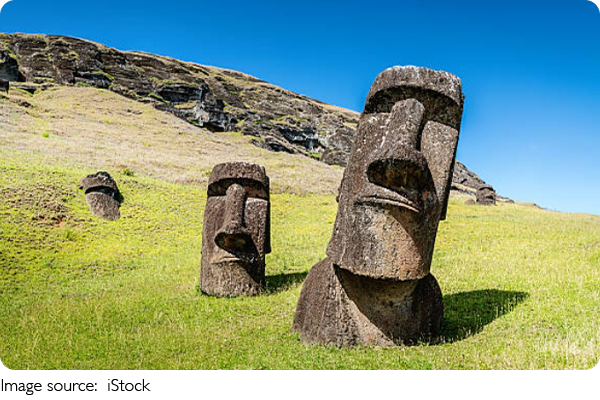
So next time you scroll past a photo of those fifteen giants, remember that they almost didn't make it back up. The tsunami scattered them, the reconstruction rebuilt them, and now they just stand there, waiting for you to show up before the tour buses do. Get there early, walk the full length of the platform, and give yourself a minute to just stand in front of the tallest one. That's the moment that sticks.