Lions Gate Bridge Guide

Amit Sharma
| 28-08-2026
 · Travel team
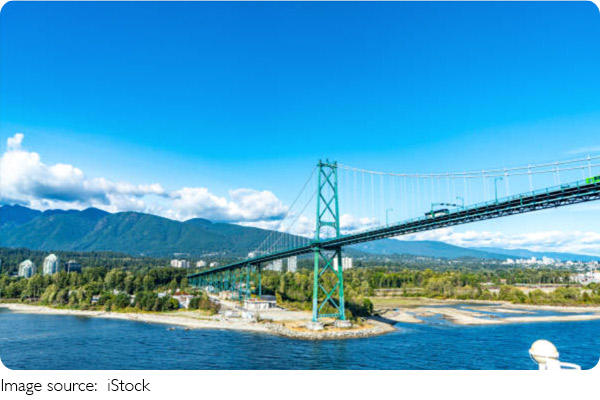
Lions Gate Bridge is one of the most recognizable landmarks in Vancouver, Canada, stretching across Burrard Inlet between the city and the North Shore.
Opened in 1938, the 1,517-metre suspension bridge combines historic engineering with impressive views of the water, Stanley Park, Vancouver’s skyline, and the surrounding mountains.
Rather than simply photographing it from a distance, visitors can experience the bridge from several perspectives by walking, cycling, driving across it, or exploring nearby viewpoints.
Lions Gate Bridge
A Historic Vancouver Landmark
Lions Gate Bridge was built to improve the connection between Vancouver and the North Shore. Its three-lane design includes a reversible centre lane, allowing traffic capacity to change according to travel conditions.
Drivers should follow the overhead lane signals and road markings carefully because the centre lane can operate in different directions.
The bridge remains an important transportation route while retaining much of the visual character that has made it a familiar part of Vancouver’s landscape.
Best Ways to See the Bridge
Walking or cycling provides a more immersive way to experience Lions Gate Bridge. Pedestrian and cycling paths allow visitors to cross while taking in views of Burrard Inlet and the surrounding landscape.
For a different perspective, visit Prospect Point in Stanley Park. The viewpoint offers an excellent angle toward the bridge, with the North Shore mountains providing a dramatic background.
Stanley Park also makes it easy to combine the visit with waterfront walks, forest trails, and other scenic stops.
How to Get There From Downtown
By taxi or rideshare:
A taxi or rideshare from downtown Vancouver to the Stanley Park area typically costs around USD $11–18, depending on the pickup location, traffic, and destination. The bridge itself has no toll.
By public transit:
Take public transit from downtown toward Stanley Park or the North Shore. A standard fare is approximately USD $2.50 for a one-zone journey, subject to current transit rates.
By bicycle:
Bicycle rental prices vary by service and rental period. Expect approximately USD $6–11 per hour for a standard bicycle from rental providers in the Stanley Park area. The route can be combined with Stanley Park’s cycling paths.
On foot:
Walking from downtown Vancouver to Lions Gate Bridge is approximately 6 km, depending on your starting point and route. Allow additional time for the walk and the bridge crossing.
When to Visit
Late morning or early afternoon can be a comfortable choice when your schedule is flexible. Traffic varies with the day, weather, events, and road conditions, so checking current conditions before travelling is recommended.
Clear weather provides the best opportunity to enjoy views of the North Shore mountains and Burrard Inlet.
Practical Tips
- Check conditions: Review traffic and transit updates before leaving.
- Watch lane signals: Follow the overhead signs when driving because the centre lane is reversible.
- Dress for the weather: Wind and changing conditions can be noticeable on the bridge.
- Plan your route: Choose your viewpoint and transportation in advance, especially if visiting both Stanley Park and the North Shore.
- Allow enough time: Include extra time for traffic, transit connections, or photo stops.
- Bring a camera: The bridge offers scenic views of Vancouver, Burrard Inlet, and the North Shore mountains.
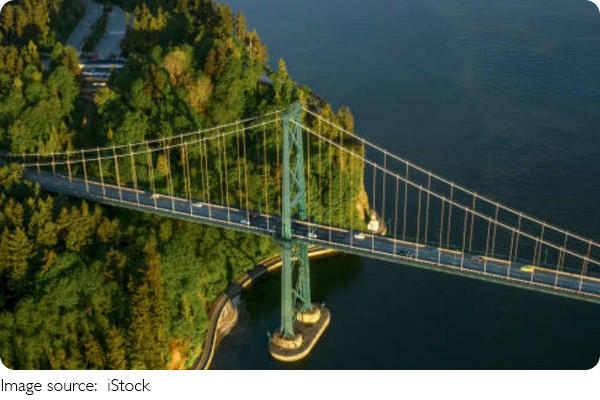
Lions Gate Bridge combines historic engineering with spectacular scenery and an important connection between Vancouver and the North Shore. Whether you arrive by car, bicycle, public transit, or on foot, crossing the bridge offers a memorable perspective on the city and its surroundings.
Make time for the viewpoints, check transportation conditions before setting out, and enjoy the crossing as part of your Vancouver experience.