The Blue River Waterfall

Chandan Singh
| 01-09-2026
 · Travel team
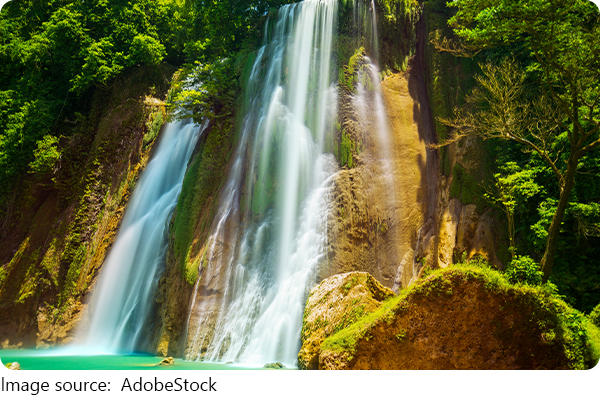
Welcome back. Most waterfalls show up as white, gray, or brown, depending on the weather.
Rio Celeste does not do that. The water here is a bright, almost unreal turquoise blue, and it looks like someone poured dye into the river.
People often assume it's a filter or a photo trick, but the color is completely natural.
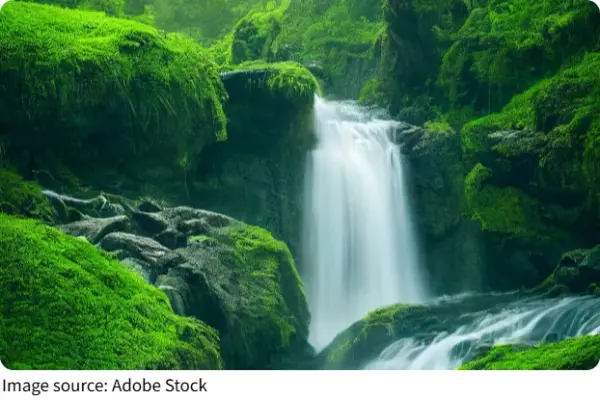
Why the water turns blue
The blue comes from a chemical reaction, not from minerals in the water. When the clear Celeste River meets the Buena Vista River, the two streams carry different levels of acidity and sulfur. That mix causes tiny aluminosilicate particles to form, and those particles scatter sunlight in a way that makes the water look cyan. You can see the exact spot where the two rivers merge, and it's oddly satisfying to watch the clear water suddenly turn blue right in front of you. Scientists from the University of Costa Rica studied the site and confirmed the color is tied to that specific meeting point, so the effect is local, not something you'll find downstream.
What the hike really feels like
The trail to the waterfall is about 3 kilometers round trip from the main entrance, and it's not flat. You'll climb a decent set of stairs near the end, roughly 200 steps, and your legs will feel it the next morning. The path is mostly mud and packed dirt, so wear shoes with real grip, not fashion sneakers. You'll pass a lagoon, a hanging bridge, and a couple of viewpoints before the final descent to the waterfall itself. The viewing platform sits close enough that you'll feel the mist, but you can't swim here. The current is stronger than it looks, and park rules keep visitors out of the water for safety.
Rio Celeste Waterfall
Timing your visit matters
Go early. The park opens at 8 a.m., and the parking lot fills up fast, especially on weekends. If you arrive after 10 a.m., you might wait 30 to 40 minutes just to get a spot, and the trail gets crowded with tour groups. The blue color also looks best in the late morning, when the sun hits the water directly. Cloudy days still show the color, but it's less vivid, so check the forecast before you commit. The whole visit, including the hike and a few photo stops, takes about 2.5 hours. Plan to be out by early afternoon, because afternoon rain is common in this part of Costa Rica, and the trail turns slippery fast.
Getting there and costs
Rio Celeste sits inside Tenorio Volcano National Park, about a 2-hour drive from La Fortuna. You'll take Route 4 toward Bijagua, then turn onto the gravel road that leads to the park entrance. A 4x4 isn't strictly required, but it helps after rain. The entrance fee is $15 for foreign visitors, and you'll pay at the ranger station. If you don't want to drive, most La Fortuna hotels can book a shared shuttle for around $30 per person, which includes round-trip transport and about 3 hours at the park. Bring cash, because the card machine at the entrance works only when the internet does, which is not always.
What to pack and skip
Bring a rain jacket, even on sunny mornings, because weather here changes without warning. Waterproof your phone or keep it in a zipper bag, since the mist near the waterfall will soak everything. Skip the flip-flops entirely, the mud will swallow them. Insect repellent is worth it, but the flies are more annoying than dangerous. There's no food inside the park, so pack a few snacks and eat them at the picnic tables near the parking lot. The nearest decent soda, or local eatery, is about 10 minutes down the road in Bijagua, and their casado plate runs around $8.
The blue is not a trick, and the hike is not a walk in the park, but that's exactly why it's worth it. Next time you're planning a Costa Rica trip, put Rio Celeste on the morning slot, and get there before the crowds do. You'll see the color, feel the mist, and understand why people keep posting photos that no one believes.