How V2V Communication Works

Caleb Ryan
| 07-07-2026
 · Automobile team
Imagine driving on a busy highway when suddenly the car in front of you slows down unexpectedly.
Instead of reacting at the last second, you already know it's happening, allowing you to safely adjust your speed ahead of time.
This kind of communication between vehicles is possible thanks to Vehicle-to-Vehicle (V2V) technology. But how exactly does it work, and what real-world scenarios could it impact? Let's explore the technology and its applications.
What Is Vehicle-to-Vehicle Communication?
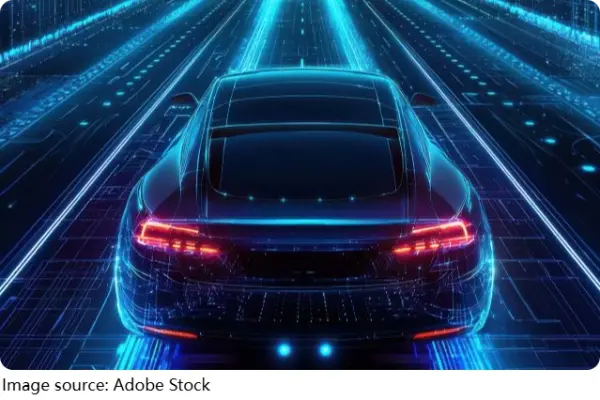
Vehicle-to-Vehicle (V2V) communication is a wireless technology that allows vehicles to communicate with each other in real-time. By exchanging data about their speed, location, direction, and other critical information, cars can “talk” to one another to prevent accidents, enhance safety, and optimize driving experiences.
How V2V Works: V2V operates through dedicated short-range communications (DSRC) or cellular networks. These communication systems allow vehicles to transmit and receive data within a short range, typically up to 1,000 feet.
This data exchange happens without human intervention, enabling near-instantaneous communication between cars.
The Key Technologies Involved: V2V communication uses GPS, sensors, and onboard computing systems to share data between vehicles. This allows cars to anticipate and react to each other's movements, even if the driver isn't aware of the other vehicle's actions.
Real-World Example: Imagine you're driving in dense fog. Thanks to V2V technology, your car receives real-time information from the vehicle ahead, warning you of any sudden deceleration, allowing you to react earlier and more safely.
The primary goal of V2V is to enhance situational awareness for drivers, making driving safer and more predictable.
Improving Safety Through V2V
One of the most impactful applications of V2V technology is improving road safety. By enabling vehicles to share real-time data about their movements, V2V can significantly reduce the likelihood of accidents.
Collision Avoidance: V2V technology can help prevent rear-end collisions, one of the most common types of accidents. If the car in front of you suddenly brakes, your vehicle will receive a warning, giving you time to slow down or stop without causing a crash.
Blind Spot Detection: V2V can also help with blind spot detection, notifying drivers when another vehicle is in their blind spot, even if they can't see it through their mirrors. This improves lane-changing safety, especially in high-traffic areas.
Real-Life Application: In a study conducted in the U.S., V2V communication showed potential to prevent or mitigate up to 80% of crashes involving non-impaired drivers, proving how effective this technology can be in enhancing road safety.
V2V helps vehicles anticipate each other's actions and act accordingly, making roads safer for everyone, whether you're driving in clear weather or under challenging conditions.
V2V and Traffic Efficiency
Besides safety, V2V communication also plays a critical role in improving traffic flow and reducing congestion. By enabling vehicles to share real-time traffic data, V2V can help optimize the entire transportation system.
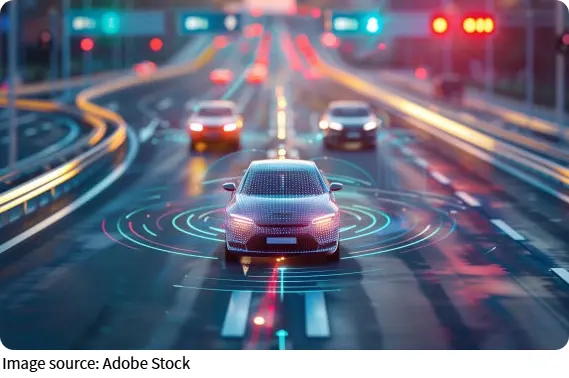
Optimizing Traffic Flow: With V2V, cars can communicate with each other to adjust their speed and spacing, helping to smooth traffic flow. For example, if a car in front suddenly slows down, your car will automatically adjust its speed to maintain a safe distance, helping to prevent traffic bottlenecks.
Improved Routing and Navigation: V2V can also help optimize routes by sharing real-time traffic conditions with other vehicles. If one route is heavily congested, vehicles can automatically reroute to less crowded roads, improving overall traffic efficiency.
Example in Action: Cities like Las Vegas have already tested smart traffic systems that use V2V technology to adjust traffic light timings and manage flow based on real-time data. This not only reduces travel time but also minimizes fuel consumption and emissions, leading to a more efficient transportation system.
By optimizing driving behavior and improving traffic management, V2V technology contributes to a smoother, more efficient driving experience, helping everyone get to their destination faster.
V2V in Autonomous Vehicles
As autonomous vehicles (AVs) become more common, V2V technology will play a critical role in their operation. Autonomous cars rely heavily on data to navigate the road, and V2V communication will help them interact seamlessly with other vehicles.
Enhancing Autonomous Vehicle Coordination: V2V allows AVs to share information with each other, creating a synchronized network of vehicles that can cooperate on the road. This will be crucial in preventing accidents and ensuring smooth traffic flow as more AVs take to the streets.
Improved Decision-Making for AVs: Autonomous vehicles can use V2V communication to gain additional context about their surroundings. For example, an AV could receive information from a car behind it that's preparing to overtake, allowing the autonomous vehicle to adjust its speed or position accordingly.
Collaborative Driving: By communicating with both human-driven and autonomous vehicles, V2V ensures that both can safely share the road. This reduces the risk of accidents and facilitates a smoother integration of AVs into the current traffic ecosystem.
As AV technology advances, V2V will be key to ensuring that these vehicles can safely and efficiently operate in real-world traffic conditions.
Looking to the Future of V2V Technology
The potential of Vehicle-to-Vehicle communication is vast. As this technology continues to evolve, it will transform not only how we drive but also how entire cities manage transportation systems. V2V communication has the power to make our roads safer, traffic more efficient, and vehicles smarter. As more manufacturers and governments adopt this technology, the future of driving looks increasingly connected, intelligent, and safe.
The integration of V2V in everyday driving isn't just about reducing accidents or improving traffic flow; it's about building a smarter, more cooperative driving environment. In the near future, vehicles will be able to predict and react to one another's actions in ways that will make roads more predictable and safer for everyone involved.