AI Is Changing Car Factories

Caroll Alvarado
| 02-07-2026
 · Automobile team
Hi, Friends! If you have ever wondered what goes on behind the scenes when a brand-new car rolls off the production line, you might be surprised to find out just how much artificial intelligence and big data are involved these days.
It is not just robots doing the heavy lifting anymore. The entire process, from design to delivery, is being transformed in ways that feel almost extraordinary.
What GenAI Is Actually Doing on the Factory Floor
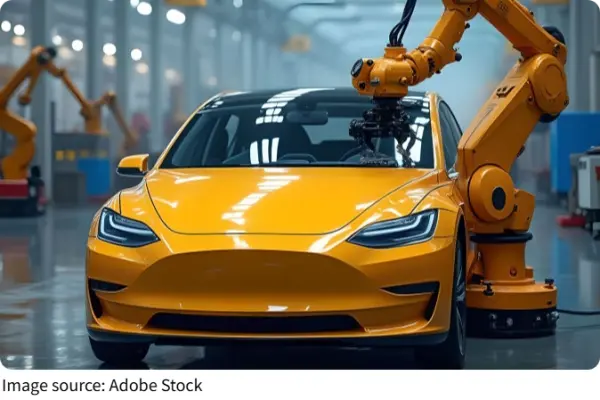
Generative AI is stepping into automotive manufacturing in a very real and hands-on way. It is helping engineers write technical documentation faster, assisting quality teams in spotting defects that human eyes might miss, and even supporting supply chain managers in predicting disruptions before they happen.
What used to take weeks of manual review can now be completed in a fraction of the time, and with a level of consistency that is genuinely impressive. The technology is not replacing workers so much as it is giving them better tools to do their jobs with greater confidence and accuracy.
Big Data Is the Backbone of Smarter Production
Every sensor on a production line, every vehicle component moving through assembly, every supplier shipment generates data. And when that data is collected and analyzed properly, it tells a story about where things are running smoothly and where problems might be quietly building up.
Automotive companies that invest in big data infrastructure are finding that they can reduce downtime significantly, catch quality issues earlier in the process, and make faster decisions without second-guessing themselves. It is the kind of insight that used to live only in the minds of the most experienced floor managers, now made available to everyone on the team.
Quality Control Gets a Major Upgrade
One of the most exciting areas where AI is making a real difference is in quality control. Traditional inspection methods rely heavily on manual checks, which are time-consuming and can sometimes miss subtle issues. AI-powered vision systems, on the other hand, can scan thousands of parts per hour, identify micro-level inconsistencies, and flag them immediately for review.
This means fewer defective vehicles reaching customers and fewer costly recalls down the line. For car buyers, that translates into better products. For manufacturers, it means protecting their reputation and their bottom line at the same time.
Supply Chain Resilience Through Predictive Intelligence
The past few years have shown everyone just how fragile global supply chains can be. Automotive manufacturers were hit especially hard by shortages and delays that cascaded through entire production schedules. Now, AI-driven predictive tools are helping companies get ahead of those kinds of disruptions.
By analyzing patterns in supplier behavior, logistics data, and even broader market signals, these systems can alert procurement teams to potential problems weeks in advance. That early warning gives companies the breathing room they need to find alternatives or adjust their plans without everything falling apart.
The Human Side of the AI Transition
It is worth taking a moment to acknowledge that all of this change can feel a little overwhelming for the people working in these environments. Learning new tools, adapting to new workflows, and trusting systems that you did not grow up using take real effort and emotional energy.
The most successful automotive companies are recognizing that. They are investing not just in technology, but in training, in open communication, and in creating cultures where workers feel supported rather than sidelined. When people and technology grow together, the results are so much better for everyone involved.
What the Road Ahead Looks Like
The integration of AI and big data into automotive manufacturing is still in its early stages in many ways. Companies that are leaning into this transformation thoughtfully are positioning themselves to be far more competitive, more efficient, and more responsive to customer needs going forward. The ones that wait too long risk falling behind in ways that will be genuinely hard to recover from.
If you work in this industry, or if you are simply someone who cares about how things around you are made, this is a fascinating moment to pay attention to. The changes happening in automotive manufacturing right now are not just about cars. They are about what human ingenuity and technology can accomplish when they work side by side with purpose and care. We would love to hear your thoughts on this, Lykkers!