Safe Night Driving Tips

Amina Hassan
| 30-04-2026
 · Automobile team
Hello Lykkers, when the sun goes down, driving conditions change in ways we may not immediately notice.
Roads look different, distances feel less certain, and our reactions need to be quicker and more careful.
In this guide, we will explore simple and practical habits that help us drive more safely at night, wherever we are in the world.
Smart Use of Vehicle Lighting
Lighting is one of the most important tools we rely on after dark. On roads with limited or no street lighting, we can use high beams to improve visibility ahead. However, when other vehicles or pedestrians appear, switching to low beams helps prevent glare and keeps everyone safer.
When we are trying to read road signs or navigation markers, a brief use of high beams can help us see clearly. Once we understand the information, we should return to low beams without delay.
During lane changes or passing situations, signaling early is essential. Light changes or brief horn use can help alert nearby vehicles to our movement, giving them time to respond calmly.
At curves, junctions, or areas without traffic signals, alternating light modes can serve as a helpful warning to others sharing the road.
In foggy, rainy, or dusty environments, we should turn on all necessary lights for visibility. At the same time, when following another vehicle closely, we should avoid using high beams to prevent glare or distraction.
Keeping a Safe Driving Speed
At night, speed should always match visibility. Since our field of view is reduced, slowing down gives us more time to react to unexpected situations.
A useful rule is to drive slower than daytime conditions and maintain a longer gap from the vehicle ahead. A distance of more than 50 meters is often recommended, but this should increase when visibility drops further.
On open roads or during poor weather, extending this distance even more helps ensure we can stop safely within the visible range ahead. The main idea is simple: we should always be able to react without rushing.
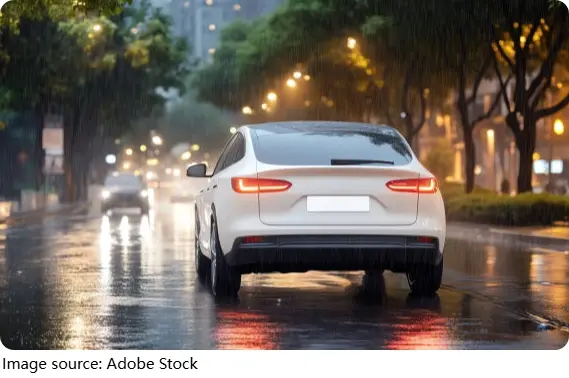
Reading Road Conditions Carefully
Night roads can hide important details. We need to pay attention not only to what is directly in front, but also to road edges, markings, and surrounding movement.
Surface appearance can give useful clues. Darker patches may indicate uneven ground or obstacles, while lighter areas might suggest moisture or different textures. Observing these differences helps us avoid sudden surprises.
In busy or mixed-use areas such as town centers, bridges, or shared crossings, extra caution is needed because people and smaller transport modes may appear suddenly. Slowing down in these zones is always a smart choice.
Safe Overtaking Decisions
Overtaking at night requires extra caution because depth perception becomes less reliable. We should only pass another vehicle when visibility and road space are both clear.
Before making any decision, it is important to check ahead and behind carefully. If the road is unclear or traffic is approaching from the opposite direction, it is better to wait.
Safe driving is not about speed changes; it is about choosing the right moment with full awareness.
Common Night Driving Challenges
One major challenge is glare from headlights. Bright lights from oncoming vehicles can reduce our ability to see clearly for a few seconds. In such situations, it helps to avoid direct eye contact with the light and focus slightly toward the road edge.
Another issue is distance perception. At night, lights can make other vehicles appear closer or farther than they actually are. This is why we should not rely only on brightness or size when judging space.
There is also a less obvious situation where pedestrians or smaller road users become harder to notice when different light sources overlap. This makes continuous scanning of the road extremely important.
Avoiding Fatigue on the Road
Driving after a long day can lead to tiredness without warning. Before starting a trip, we should make sure we are well rested. During longer journeys, taking regular breaks helps maintain focus.
If we notice signs of fatigue such as reduced concentration or slower reactions, we should stop driving and rest immediately. Continuing in a tired state increases risk and reduces control.
Simple breaks can refresh attention and greatly improve safety.

Driving Safer After Sunset
Night driving is all about awareness, patience, and small adjustments that make a big difference. By managing lighting properly, keeping a steady speed, reading road conditions carefully, and staying alert, we can handle nighttime travel with much more confidence.
Lykkers, every journey after dark is a reminder that safe driving is built on attention to detail. When we stay calm and observant, the road becomes far more predictable and manageable, no matter where we are in the world.