Autonomous Cars in Action
Mason O'Donnell
| 29-04-2026
 · Automobile team
Ever watched a self-driving car glide through a busy street and wondered how it avoids colliding with anyone?
It's more than cameras and sensors—it's a combination of advanced perception systems, real-time data processing, and intelligent algorithms.
These systems allow autonomous vehicles to detect pedestrians darting across the road, cyclists weaving through traffic, and unexpected obstacles lying in wait. Understanding how this works sheds light on the intricate engineering that keeps passengers and pedestrians safe.
Sensor Technology for Detection
Self-driving cars rely on multiple sensors to “see” the world around them. Each sensor type has strengths that complement the others.
1. Lidar – Emits laser pulses to create detailed 3D maps of the surroundings. Lidar can detect the shape and position of pedestrians and objects even in low light conditions.
2. Radar – Uses radio waves to track moving objects and measure their speed. Radar works well in fog, rain, or snow, where vision-based sensors might struggle.
3. Cameras – Capture high-resolution images that AI algorithms analyze to identify shapes, colors, and movement patterns. Cameras are critical for recognizing traffic signs, lane markings, and pedestrian gestures.
Actionable example: Some autonomous vehicle companies combine Lidar and radar data with camera images to create a “sensor fusion” system, ensuring accurate detection even when one sensor is partially blocked or compromised.
Artificial Intelligence and Semantic Understanding
Sensors gather data, but understanding that data requires advanced AI. Self-driving cars use deep learning models to make sense of complex scenes.
1. Object recognition – Neural networks trained on millions of images identify cars, bikes, pedestrians, animals, and road debris.
2. Predictive modeling – AI predicts pedestrian paths based on speed, direction, and behavior. For example, a person approaching a curb is flagged as likely to cross.
3. Contextual understanding – The system considers the environment, such as crosswalks, school zones, or construction areas, to adjust detection priorities.
Actionable example: AI models can distinguish between a stationary object on the sidewalk versus one that might suddenly step into traffic, allowing the car to react preemptively.
Real-Time Data Processing
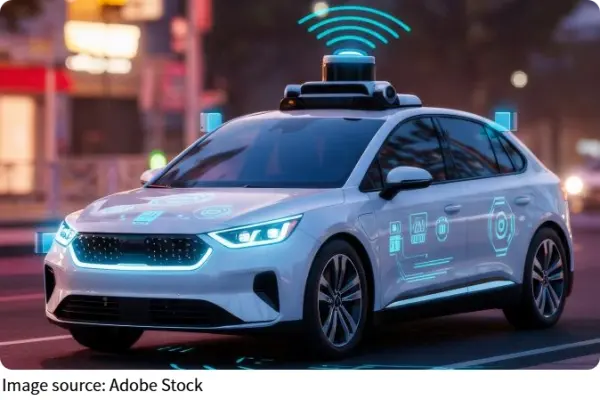
Detecting objects isn't enough if the car can't react in time. Real-time processing turns sensor input into immediate action.
1. High-speed computation – Onboard computers process terabytes of sensor data per second, converting raw input into actionable commands.
2. Latency reduction – Algorithms prioritize urgent threats, such as a child running into the street, over less immediate obstacles.
3. Continuous updates – Vehicles constantly recalibrate their understanding of the environment as objects move or new information arrives.
Actionable example: Some systems use edge computing, placing AI models directly in the vehicle rather than relying on cloud servers, reducing latency and ensuring split-second responses.
Mapping and Localization
Accurate maps and positioning are essential for recognizing hazards.
1. HD maps – High-definition maps provide details like curbs, crosswalks, and lane layouts that help the car anticipate where pedestrians might appear.
2. GPS and inertial measurement – Combine to give precise vehicle positioning, even in dense urban environments where GPS alone can be inaccurate.
3. Dynamic updates – Real-time map corrections account for temporary obstacles like construction barriers or parked vehicles.
Actionable example: Vehicles constantly compare sensor data to HD maps to detect anomalies, such as a new obstacle in a familiar intersection, ensuring proactive hazard detection.
Safety Protocols and Redundancy
Redundancy ensures that if one system fails, others maintain safety.
1. Multi-sensor overlap – Lidar, radar, and cameras cross-verify detections, reducing false positives and missed hazards.
2. Fail-safe behavior – If a sensor fails, the car can slow down, stop, or hand control to a human operator.
3. Scenario testing – Vehicles undergo thousands of simulated scenarios, from jaywalking pedestrians to unexpected debris, to refine hazard responses.
Actionable example: Autonomous prototypes are designed so that even if the main detection system goes offline, secondary sensors allow the car to safely navigate or come to a controlled stop.
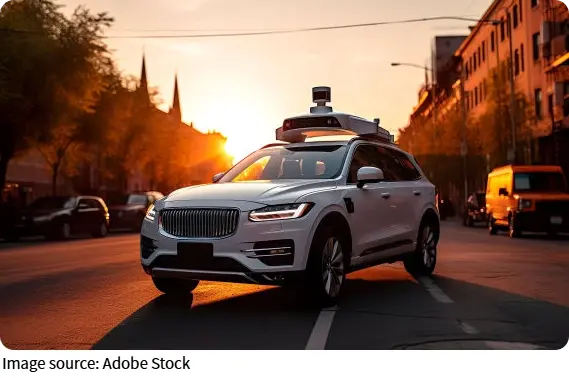
Self-driving cars are no longer just futuristic concepts—they are engineered with a combination of cutting-edge sensors, AI-powered perception, and rigorous safety protocols that allow them to handle complex road scenarios. Understanding these systems highlights how much thought and technology goes into detecting pedestrians and obstacles. The next time you see a self-driving car navigating a crowded street, you'll know that behind that smooth ride is a symphony of detection, prediction, and split-second decision-making—all designed to keep everyone safe.