Lofoten Travel Guide

Declan Kennedy
| 18-03-2026
 · Travel team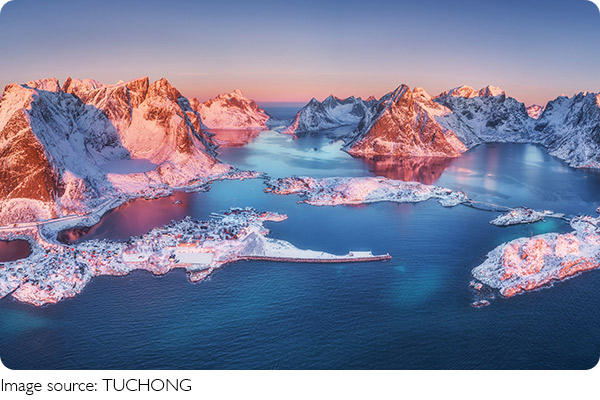
The Lofoten Islands are an extraordinary archipelago above the Arctic Circle in Northern Norway, where rugged mountain peaks plunge into pristine fjords and the sea dances under the Midnight Sun and the Northern Lights.
Here, dramatic coastal landscapes—carved by ice and sea over millennia—are paired with small fishing villages, deep cultural roots, and outdoor adventures that appeal to hikers, photographers, and nature lovers alike.
When to Visit and Highlights
Lofoten has two distinct peak seasons:
• Summer (June–August): Expect the Midnight Sun, long daylight hours, vibrant wildflower meadows, and ideal conditions for hiking, kayaking, and scenic drives.
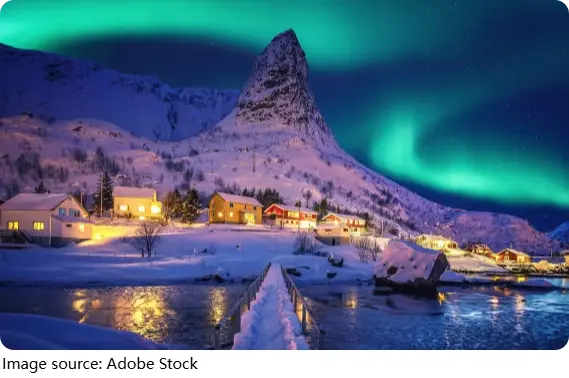
• Autumn–Spring (September–April): Cool weather and darker skies bring spectacular Northern Lights displays while snow capped peaks create dramatic scenery.
There's no entry fee for the islands themselves, but activities such as guided hikes, boat tours, and museum admissions may carry separate charges.
How to Get There
Reaching Lofoten requires a bit of planning due to its remote Arctic location:
• By Plane: Regional airports in Svolvær (SVJ), Leknes (LKN), and Røst (RET) serve the islands. Flights connect from Oslo via Bodo or Evenes (Harstad/Narvik), often with a short connecting regional flight.
• By Boat/Ferry: Car ferries run from Bodo to Moskenes (typically 3–4 hours) and daily express boats connect Bodo, Svolvær, and surrounding islands.
• By Road: Once on the islands, the E10 road stretches across the archipelago, offering one of the most scenic drives in Norway.
Public buses connect major towns but are infrequent; renting a car is highly recommended for flexibility.
Accommodation Options & Prices
Lofoten caters to a variety of traveler budgets, but prices tend to be higher than average due to its remote location and high demand:
1. Rorbu Cabins (Traditional Fisherman's Cabins): Iconic stays right on the water, offering scenic views and unique cultural character. Prices are typically USD 200–400 per night in peak season.
2. Hotels & Guesthouses: In towns like Svolvær, Reine, or Henningsvær, expect USD 150–300 per night depending on comfort level and season.
3. Camping & Cabins: Campsites and simpler cabins can reduce costs to USD 50–120 per night, especially outside summer peak dates.
Booking early—especially for summer and holiday windows—can secure better rates and preferred locations.
Top Activities and Sights in Lofoten
Lofoten's natural beauty and culture are the main attractions:
1. Hiking & Scenic Views: Dramatic hikes like Reinebringen offer panoramic vistas over fjords and fishing villages.
2. Lofotr Viking Museum: A reconstruction of a Viking Age chieftain's longhouse, giving insights into early Scandinavian life.
3. Stockfish & Fishing Culture Museums: Discover the history of Arctic cod stockfish and traditional industry at dedicated museums in Å and other villages.
4. Beaches & Coastal Trails: Stunning sandy beaches like Ramberg and rugged coastal paths provide relaxing days between hikes.
5. Kayaking & Boat Tours: Fjord cruises and sea kayaking introduce you up close to dramatic cliffs, seabird colonies, and ocean life.
Practical Travel Tips
• Transport: Renting a car remains the most flexible way to explore; public bus timetables can be sparse between towns.
• Weather: Conditions change quickly; pack waterproof, warm layers and sturdy boots year round.
• Food & Dining: Small cafés and local restaurants are available but moderately priced; grocery stores can help reduce dining costs.
Reflection: The Lofoten Experience
Visiting Lofoten isn't just a trip—it's an embrace of raw, elemental nature. The interplay of ocean and mountain, of light that never sets or dances above snowy peaks, invites you to slow down and absorb the quiet drama of the Arctic world. The beauty of Lofoten isn't only in postcard scenes—it's in the early morning stillness of a fjord, the warmth of a rorbu cabin after a long hike, and the sense that this place has changed you by simply existing.