Timeless Marble Wonder

Arvind Singh
| 16-03-2026
 · Travel team
The Taj Mahal has captivated travellers, historians and architects for centuries.
Rising in resplendent white marble on the banks of the Yamuna River, it is not merely a building but a story etched in stone — a blend of love, grief, artistry and human endeavour.
Standing before it at sunrise — when its marble glows softly against the sky — visitors can feel why this monument is among the most admired on Earth.
Origins: A Monument to Love and Legacy
The Taj Mahal was commissioned in the early 17th century by a Mughal emperor to commemorate someone deeply cherished. Construction began around 1632 and spanned over two decades, with decoration and detailing continuing for several years after the main structure was completed. It was built in memory of Mumtaz Mahal, the emperor's favourite consort, whose passing during childbirth left a profound mark on him. The edifice was meant to stand as an enduring tribute to her.
More than 20,000 labourers, craftsmen and artisans from across a vast region contributed to the project. Apart from local resources, precious and semi precious materials were brought from areas afar to adorn the interiors and exteriors. These efforts came together to create a mausoleum that is both architecturally harmonious and richly detailed.
1 Astonishing Architectural Features
The Taj Mahal stands out not just for its emotional story but for its remarkable design and craftsmanship. Some notable features include:
1. Perfect Symmetry and Proportion: The complex is arranged in a balanced layout, with the mausoleum positioned at one end of the garden's axis — a planning innovation that enhances perspective and depth.
2. Inlaid Marble Work: The detailed floral and geometric patterns are crafted through a technique known as pietra dura, where semi precious stones like lapis lazuli, jade, and cornelian are set into the marble surface.
3. Reflective Gardens and Water Pools: Symmetrical gardens and long watercourses reflect the architecture, creating mirror like visuals that emphasize beauty and serenity.
4. Calligraphy and Ornamentation: Finely executed calligraphy from sacred scriptures and detailed carvings embellish walls and gateways, showcasing both artistic and spiritual layers.
These elements combined have made the Taj Mahal a classic highlight of Indo-Mughal architecture and a masterpiece recognised globally for its artistic refinement.
Experience for Visitors: What to Expect
Visitors today come from all over the world to experience the Taj Mahal firsthand. Because it is a World Heritage Site, it is protected for its cultural and historical value and remains open for millions of travellers every year.
Tours typically begin at sunrise or later in the morning when light plays across the marble surface. Travellers often note how the monument's hues seem to change with the sun's angle — from soft cream in early light to a glowing white under full sun. While the core mausoleum holds the cenotaphs (false tomb sculptures) inside, the real resting places lie below at garden level.
Apart from the main building, the complex includes two flanking structures — a mosque and a mirrored guesthouse — as well as large gardens featuring tree lined paths and central water channels. Each contributes to the tranquil atmosphere that makes a visit deeply memorable.
Cultural Significance and Preservation
Designated a UNESCO World Heritage Site, the Taj Mahal is recognised as one of the finest achievements in human craftsmanship. Its inscription reflects not only aesthetic excellence but also its role as a cultural symbol of architectural innovation and cross cultural artistic exchange.
Protecting the site involves ongoing conservation efforts, particularly addressing environmental threats such as air quality that can affect the marble's appearance. The broader area around the monument — including traditional crafts like the marble inlay work practised by local artisans — is part of the living heritage that UNESCO highlights as worth safeguarding for future generations.
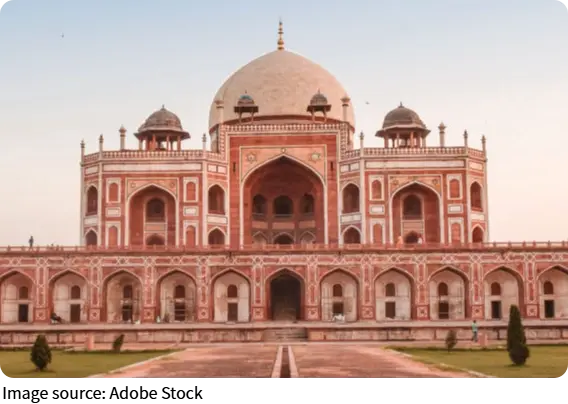
Reflection: More Than Stone and Marble
Standing before the Taj Mahal is more than viewing an architectural wonder; it is connecting with a story that transcends time. Its corridors whisper tales of love and loss, human creativity and devotion. As visitors walk through the gardens, trace intricate carvings, and watch light shifting across marble domes, they encounter both beauty and meaning.
The Taj Mahal teaches that monuments are not merely physical structures — they are embodiments of emotion, history and collective human aspiration. In preserving such places, we preserve a bridge between past genius and future imagination.