Luanda: Atlantic Energy

James Carter
| 08-06-2026
 · Travel team
Luanda hums with sea breezes, skyline cranes, and stories layered along its bay.
The city divides into Baixa (downtown) and Cidade Alta (on the bluff) and rewards travelers who plan smart: think bay walks at sunset, design landmarks, coastal viewpoints, and easy escapes to dunes and surf.
Below, you’ll find costs, transit tips, and time-savers for a smooth first visit.
Where to stay
Expect higher prices than many African capitals. Solid midrange hotels typically run $120–200 per night; business-class stays near the bay range $220–380 with pools and gyms. Guesthouses or apartments in Baixa or Ilha do Cabo start around $55–95. Book places with breakfast, airport pickup, and reliable Wi-Fi. For families, look for rooms with kitchenettes to trim dining costs.
Getting around
From Quatro de Fevereiro Airport, pre-book a hotel transfer ($20–35 in town, $35–50 to the peninsula) or use vetted ride-hailing apps with in-app payment. Yellow taxis are metered; confirm the rate before moving. Traffic peaks 07:00–09:00 and 16:30–19:00; plan museum visits late morning and bay walks near sunset. Carry small bills for tips and parking attendants.
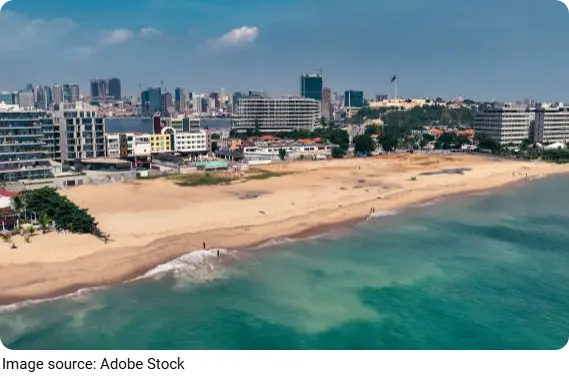
Bayfront walk
Stroll Avenida 4 de Fevereiro, the elegant promenade curving along Luanda Bay. You’ll pass landmark facades and the port’s clock tower, with benches for sea-watching. Morning light is best for photos; evenings bring cooler air. Budget $0 for the walk, $2–4 for a juice, and $6–12 for casual plates at waterfront cafés offering grilled chicken, rice, beans, and salads.
Saint Michael
Rising over Baixa, Fortaleza de São Miguel showcases intricate ceramic tiles that narrate centuries of local history. Plan 60–90 minutes to explore the ramparts and courtyards. Entry commonly ranges $3–8; bring cash and a hat—shade is limited. The views sweep across the bay and city grid, making it a smart first stop to orient your mental map.
Past and memory
Set on the coast, the National Museum of Slavery presents images and texts tracing the trade that once moved through these shores. It’s compact—allow 30–45 minutes—but impactful. Entry typically $2–5. Pair it with quiet time on the promenade afterward. Dress modestly and be respectful if photography is limited inside.
Iron Palace
The canary-yellow Palácio de Ferro, attributed to a 19th-century design house, is a feast for fans of cast-iron architecture. Expect filigreed railings, wood detailing, and a tidy garden. Entry policies vary; when open, tickets are usually $3–6. Combine this stop with Baixa’s heritage streets and a nearby café for a half-day architecture loop.
Moon Viewpoint
About 40 km south, Miradouro da Lua reveals cliffs sculpted into otherworldly ridges—gold, rust, and chalk stacked like a natural amphitheater. Hire a driver ($35–60 round-trip from Luanda) or join a half-day tour. Best light: early morning or late afternoon. There’s little shade; bring water, sunscreen, and closed shoes for sandy edges.
Miradouro da Lua
Ilha do Mussulo
This slim peninsula is Luanda’s sunny escape: calm water, soft sand, and low-key beach clubs. Shared boats and taxis from the mainland are common ($3–10 each way, depending on point). Sunbed sets run $6–15; simple lunches are $6–12. Weekdays are quieter; weekends fill up with families. Pack a dry bag for the short boat hop.
Coastal surfing
South along the coast, Cabo Ledo is known for friendly, long rides that suit learners and confident riders alike. Private transfers are $60–110 each way; many lodges offer lessons ($25–45 per session) and board rental ($10–20). Stay in simple bungalows ($45–90 per night) or day-trip from Luanda with a very early start to beat traffic.
Quiçama day out
Quiçama National Park, roughly 70 km from the city, makes a restorative nature day with savanna vistas and riverside scenery. Book a guided drive via reputable operators ($70–140 per person, depending on group size and inclusions). Bring a hat, insect repellent, and snacks. Facilities are limited; confirm vehicle type and drinking water before departure.
Museums duo
For a broader lens on the country, the National Museum of Natural History displays regional specimens and geology; the National Museum of Anthropology focuses on craft traditions, dress, music, and everyday objects. Each typically costs $2–5. Allocate 45–60 minutes per museum. Many exhibits are in Portuguese; a local guide can add context for $10–20 per hour.
Benfica Market
South of the center, Benfica Market bursts with textiles, baskets, woodwork, and paintings. Go in daylight with a guide for smoother bargaining and price checks. Expect to pay $8–25 for decorative pieces and $30–60 for larger items. Important: never buy ivory or wildlife products—both unethical and illegal. Carry cash and bubble wrap for packing.
Stylish pause
Need air-conditioning and a reset? Belas Shopping offers cinemas, a supermarket, ATMs, and local brands. It’s handy for SIM cards ($3–8, plus data), snacks, and pharmacy items you might have forgotten. Food-court mains run $5–10; plan 60–90 minutes if you’re combining errands and lunch between sightseeing stops.
Evening views
For an easy, elegant night, choose a bay-view hotel terrace for mocktails or fresh juices ($4–8) and light plates ($8–14). Dress smart-casual; many venues appreciate reservations. Prefer a laid-back vibe? Return to the seafront promenade for a golden-hour walk and street snacks—grilled corn, cassava fries, and fruit cups are common and budget-friendly.
Quick costs
Airport transfer $20–50 • Museum tickets $2–8 • Driver half-day $40–80 • Midrange meal $7–15 • SIM + data $8–15 • Beach day (transport + sunbed + lunch) $15–35 per person.

Final thought
Luanda shines in contrasts: polished bayfronts, sculpted cliffs, and quiet museums that lend context to the coast. When you go, which rhythm will set your pace first—an early promenade, a design walk in Baixa, or a dune-lit afternoon at Miradouro da Lua?